What a Sur-Ron really costs in 2026
Sur-Ron doesn't sell direct in the US, so the price is whatever a dealer lists. On November 12, 2026, Luna Cycle, a long-standing Sur-Ron dealer, listed the Light Bee X at $4,600, out of stock, with a 34Ah Panasonic battery and a 38Ah Samsung pack for $150 more. Voro Motors listed the Ultra Bee HP at $5,999, in stock, against a list price of $6,399.
Be careful with the dozens of sites offering "Sur-Ron" bikes at $2,000 or "70% off". We found plenty with .us.com style domains and prices that make no sense. If a deal looks too good, check the seller on Sur-Ron USA's dealer map before you pay.
Then add the real-world extras: freight or dealer prep, a helmet, goggles, boots, gloves and armor (several hundred dollars at least), and the upgrades almost every owner ends up buying.
What you get for the money
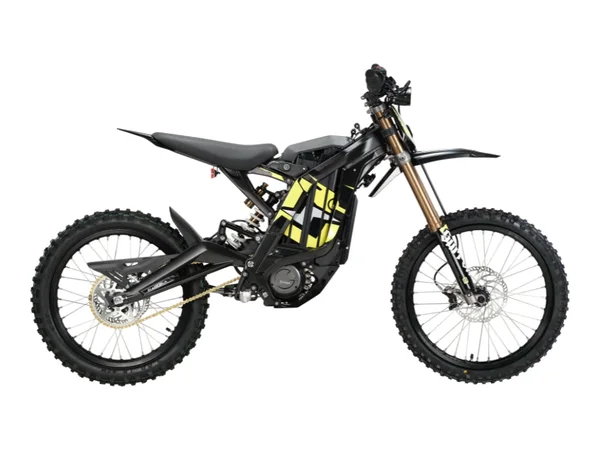
The Light Bee X's case is weight. Sur-Ron USA lists 125.6 lbs curb weight, 8,000 W peak, 196.2 ft-lb of torque, 46.6 mph and 46.6 miles at 24.9 mph. That's the lightest adult bike on our list, and light is what makes a bike fun on tight singletrack: you can flick it, lift it over a log and pick it up after a fall without help.
The other case is the ecosystem. No light e-moto has more aftermarket parts: controllers, batteries, forks, wheels, bars, seats. Shops know the bike, YouTube is full of how-to videos, and resale is easy because everybody knows what a Sur-Ron is.
The Ultra Bee is a different proposition: Sur-Ron lists 24.5 kW, 384 ft-lb and a 74V 60Ah (about 4,440 Wh) battery for the 2026 HP version. It's Sur-Ron's answer to riders who outgrew the Light Bee.
What a charge costs
Here's a part of the math that goes in the Sur-Ron's favor. A full charge of the Light Bee X pack we priced is about 2 kWh. At 17 cents per kWh (check your own bill), that's around 35 cents per charge. The Ultra Bee's 4,440 Wh pack is about 75 cents. Next to fuel and oil for a gas bike, that's almost nothing.
So fuel is almost free. The money goes elsewhere: the battery is the one big future cost, and no brand on our list promises a pack lasts forever. Before you buy, ask the dealer what the battery warranty covers, how many charge cycles the brand expects, and what a replacement pack costs today. Write the answers down; they matter more for the five-year math than any discount.

Video: "Is The 2026 Surron Lbx Actually Good?", Jordan Roderick on YouTube. Not made by us; chosen because it shows the bike or the topic clearly.
The catch: battery per dollar
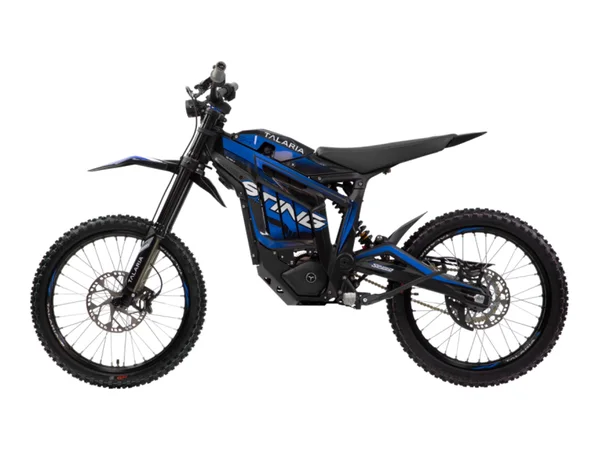
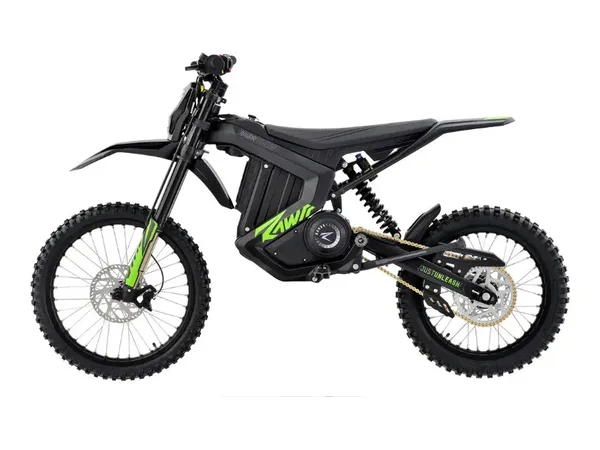
Here's where the math turns. Using the battery the Luna listing ships with (about 2,040 Wh), the Light Bee X gives roughly 44 Wh per $100. The Talaria Sting R MX4 gives 60 Wh per $100 (2,700 Wh for $4,499.99) and the Rawrr Mantis X 72 Wh per $100 (2,160 Wh for $2,999). The E Ride Pro SS 4.0 gives 72 Wh per $100 too, with a 3,600 Wh pack.
Battery is range, and range is what decides whether you ride one loop or three. That's why the Light Bee lands mid-table in our formula: it wins on weight, loses on price and battery, and we couldn't read a warranty term on the pages we used.
Who should buy a Sur-Ron
Buy a Light Bee X if you ride tight, technical trails where weight matters more than range, if you love tinkering and upgrades, or if you want the bike your riding friends already know how to fix. Buy an Ultra Bee if you've outgrown the Light Bee and want Sur-Ron's dealer network with big-bike power.
Look elsewhere if you're shopping on value. The Talaria MX4 is the closest rival, the Rawrr Mantis X is the cheapest real e-moto on our list, and the E Ride Pro SS 4.0 has the biggest battery at its weight.
Light Bee X or Ultra Bee?
If you've decided on a Sur-Ron, this is the real choice, and the gap is bigger than the names suggest. The Light Bee X is listed at 8 kW peak, 2,040 Wh and 125.6 lbs. The Ultra Bee is listed at 24.5 kW, 4,440 Wh and 187 lbs. That's three times the power and twice the battery, for about 61 lbs more and $1,399 more on the prices we checked.
Pick the Light Bee X if you ride tight, technical trails, if you're on the lighter side, or if you load the bike into a truck on your own. It's the one that feels like a mountain bike with a motor. Pick the Ultra Bee if you're a heavier or faster rider, if your sessions are long, or if you ride open terrain where power and range matter more than flicking the bike around.
Not sure? Our comparison tool puts the two side by side, spec by spec.

Five questions to ask the dealer
Before you hand over $4,600, ask:
- Which battery is in the crate: 34Ah, 38Ah or 40Ah? It changes range and value.
- Is it the 2025 or 2026 model, and what changed?
- What warranty comes with it, and who handles claims?
- What are freight and prep fees?
- Which upgrades void the warranty?
A good dealer answers all five in writing. If they dodge the battery question, walk.
Resale and running costs
An electric dirt bike skips gas, oil changes, air filters and spark plugs. What wears is the same as any dirt bike: tires, chain or belt, sprockets, brake pads, and eventually the battery. Sur-Ron's popularity helps here too: parts are easy to find and used Light Bees sell quickly, which softens the higher price if you sell after a season or two.
Budget for the extras honestly and the "worth it" answer gets clearer: a Sur-Ron is worth it for the riding feel and the ecosystem, not for the spec sheet.
The bikes in this article, side by side
| Bike | |||
|---|---|---|---|
| Price | $4,600 | $4,499.99 | $2,999 |
| Peak power | 8 kW peak | 8 kW peak | 7.5 kW peak |
| Battery | 2,040 Wh | 2,700 Wh | 2,160 Wh |
| Weight | 125.6 lbs | 143 lbs | 139 lbs |
| Top speed (brand) | 46.6 mph | Not stated | 50 mph |
| Warranty | Not stated | 1-year | 1-year |
| Road status | Off-road only | Off-road only | Off-road only |
| Buy | See price | See price | See price |