Why most electric dirt bikes aren't street legal
A road-legal motorcycle needs more than lights. It has to be built and certified to federal motor vehicle safety standards, carry a 17-character VIN that your state will title, and come with paperwork the DMV accepts. Most light e-motos are imported and sold as off-road vehicles, without that certification.
The dealers say so plainly. REV Rides lists the E Ride Pro SS 4.0 as "designed and intended for off-road and closed-course use only". Rawrr says Mantis bikes "are not street legal". Segway classifies the Xaber 300 and the Xyber as off-road only. And REV says the Talaria Sting R MX4 ships speed-limited to 20 mph to comply with federal, state and local laws.
Headlights, blinkers and a horn on an off-road bike don't change its status. E Ride Pro's dealer notes the lights on the SS 4.0 don't make it road legal.
Which bikes on our list have a road version
Three bikes on our list have a road-legal path from the brand itself:
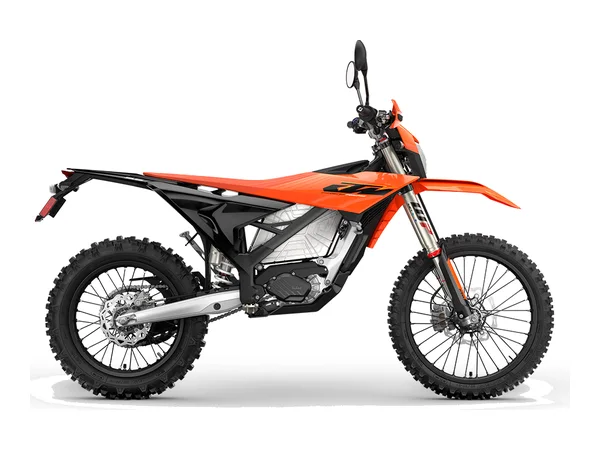
- The KTM Freeride E: KTM's US page lists "road legal capability", a 2-year warranty and $9,999 MSRP plus $690 freight.
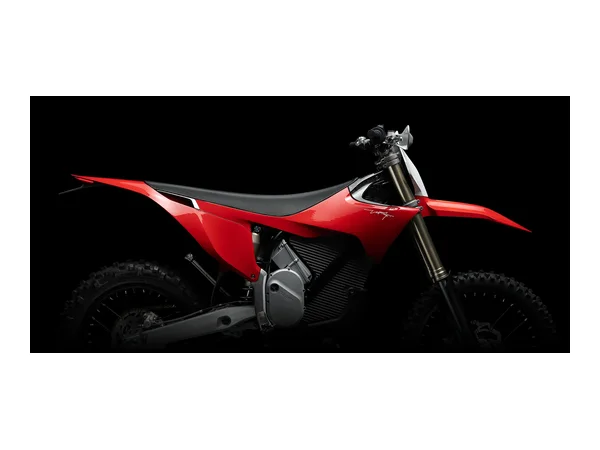
- The Stark VARG EX: Stark says it is homologated in the USA, on a Class M license from 16, in both power settings. $13,040 on the US configurator.
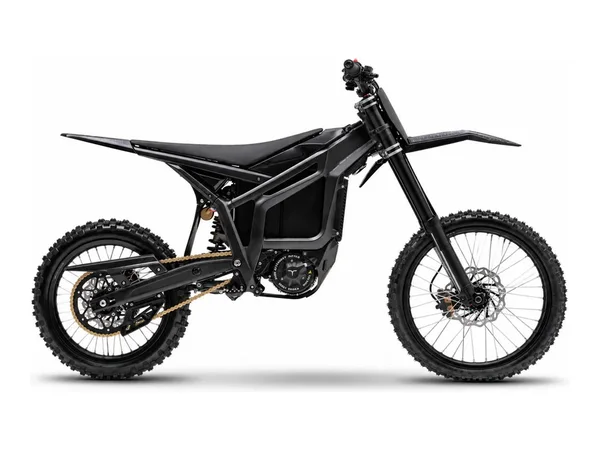
- The Talaria Komodo: an L3e version with road equipment. The dealer itself says that doesn't guarantee registration in your state.
Sur-Ron builds road-registered Ultra Bee versions for some markets, but the HP version sold by Voro Motors in the US is an off-road bike.
Your state decides
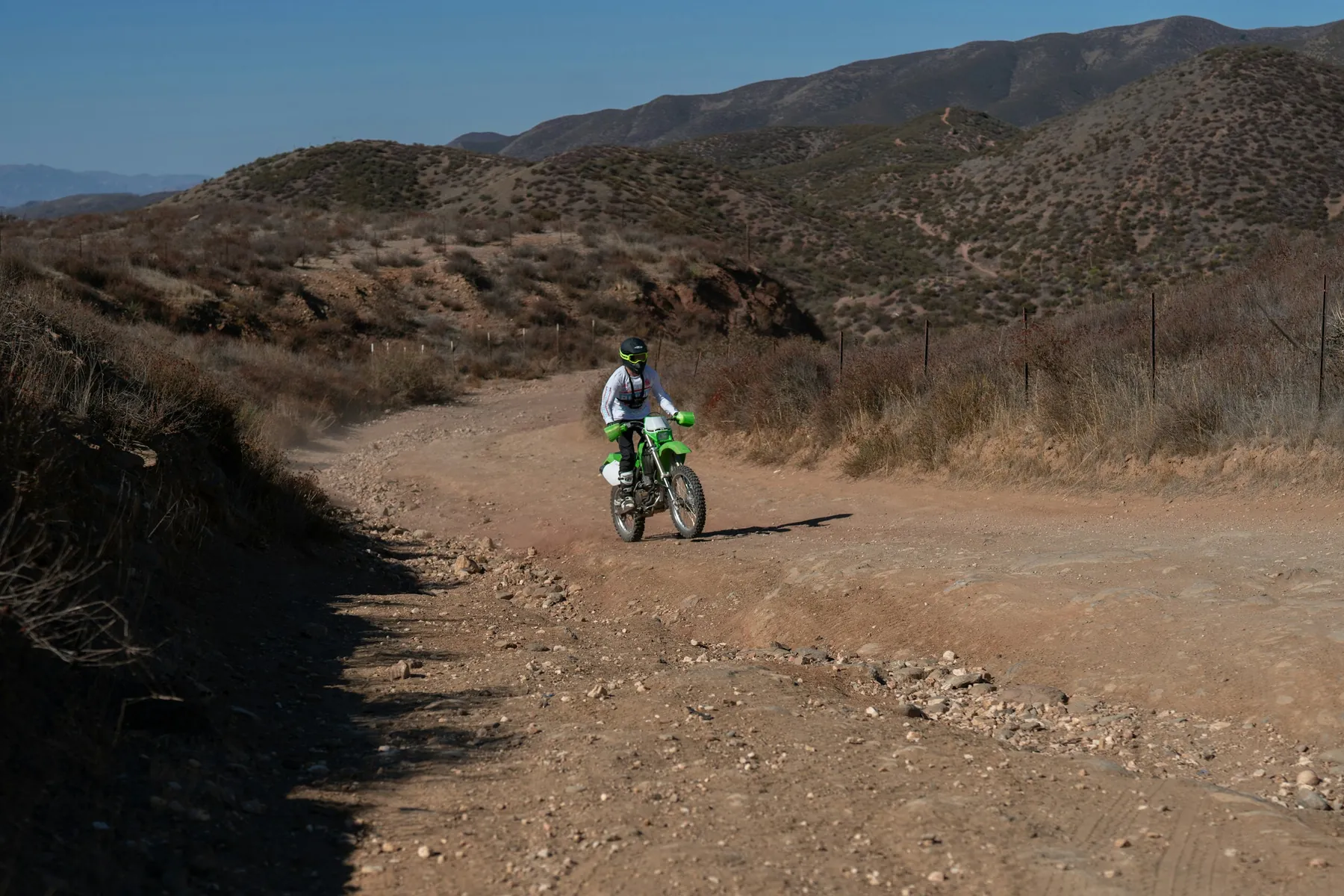
Registration happens at the state level, and states differ a lot. Some will title a converted off-road bike after an inspection; many won't. Some have a separate off-highway registration: California's DMV, for example, runs a dedicated off-highway vehicle registration for bikes ridden on OHV trails. Public land managers have their own rules too; the Bureau of Land Management lists where OHVs can ride on its lands.
The safe path: before you buy, call your DMV with the exact make, model and VIN format, and ask whether they will title and register it for road use. Get the answer in writing.
Video: "2025 Stark Varg EX Review – Is This the Future of Dual-Sport? 🏍⚡", Motorcycle.com on YouTube. Not made by us; chosen because it shows the bike or the topic clearly.
Off-road has rules too
Even if you never touch a road, an electric dirt bike isn't rule-free. On public land, most states treat it like any other off-highway motorcycle: it rides where motorcycles are allowed, and it often needs an off-highway registration or a yearly sticker, the same as a gas bike. Some trail systems also set age limits and ask young riders to be supervised or to hold a safety certificate.
Private land is simpler, but get the owner's permission in writing if it isn't your land, and check your county's rules: a few limit riding near homes, whatever the bike runs on.
The good news for e-moto owners: no exhaust and very little noise, so the complaints that close riding spots are much rarer. Ride with that in mind, keep speeds down near people and horses, and stay on marked trails.
What about "street legal kits"?
You will find kits with mirrors, a horn, turn signals, a license plate bracket and DOT tires. In some states, bolting these on and passing an inspection is enough to register an off-road bike. In many others, it isn't, because the bike was never certified for road use in the first place.
A kit can also void your warranty or break your dealer's terms. And riding an unregistered e-moto on the road can mean fines, an impounded bike and insurance trouble if something goes wrong. Ask before you bolt.
License, insurance and age
A road-legal e-moto is a motorcycle in the eyes of most states: you need a motorcycle license or endorsement, registration and insurance. Stark mentions a Class M license from 16 for the VARG EX. Off-road, many states set age and supervision rules for OHVs, and some require a safety course for young riders.
Whatever the law says, training pays. The Motorcycle Safety Foundation runs courses across the country, including dirt bike classes.
What to check before you buy for the road
If road use is the plan, do your homework before you pay, not after. Here's the order we'd follow.
- Read the brand's own wording. "Homologated", "road-legal version" or "L3e" on a European page isn't the same as a US road approval. Stark says the VARG EX is homologated in the USA; KTM lists a road-legal Freeride E. Most others on our list say off-road only.
- Ask what paperwork comes with the bike. Your DMV will usually want a title or a manufacturer's certificate of origin, and some states also want a VIN inspection. No paperwork, no plate.
- Call your DMV or check its website. Ask which class the bike falls into, what equipment it needs (lights, mirrors, horn, turn signals, DOT tires) and whether off-highway registration is a separate step. California's DMV page on off-highway vehicles is a good example of how detailed this gets.
- Ask your insurer. Some won't cover a converted off-road bike at all.
It sounds like a lot. It is. That's why a bike sold road-legal from the factory is worth paying more for if you'll really ride on the road.
How to choose if you want road use
If road use matters, put it first and shop backwards. A bike with a factory road version (KTM, Stark) costs far more than a light e-moto, but it saves you a legal gamble. The Komodo L3e sits in between: road equipment for $5,699, with registration up to your state. Our street-legal ranking scores these three with road status counting for 40%.
If you only ride trails and private land, ignore all of this and buy the off-road bike that fits you best. You'll save thousands.
The bikes in this article, side by side
| Bike | |||
|---|---|---|---|
| Price | $9,999 | $5,699 | $13,040 |
| Peak power | 19.2 kW peak | 32 kW peak | 44.7 kW peak |
| Battery | 5,500 Wh | 4,374 Wh | 7,200 Wh |
| Weight | Not stated | 216 lbs | 264 lbs |
| Top speed (brand) | 59 mph | 65 mph | Not stated |
| Warranty | 2-year | 1-year | 2-year |
| Road status | Road-legal version (brand) | Road kit / L3e option | Road-legal version (brand) |
| Buy | See price | See price | See price |